
Since 2017Insights
Can tattoo ai understand your artistic preferences?
Modern tattoo AI was trained by analyzing a dataset of over 50 million high-definition tattoo images. Its deep learning model can recognize more than 200 artistic styles, ranging from traditional Japanese ukiyo-e to extremely simple lines, with a style classification accuracy rate as high as 92%. According to research presented at the 2023 International Conference on Creative Computing, advanced generative adversarial networks can convert user-uploaded inspiration images or keywords into three preliminary design drafts on average within 3.2 seconds, which is more than ten times the speed of traditional tattoo artists' hand-drawing. For instance, a report from a well-known Tattoo AI platform shows that the consistency between the prediction of users' color preferences and their final choices by its algorithm reaches 85%. This is attributed to the real-time analysis and optimization of users' historical browsing data, with an average of 150 clicks per session.
At the level of personalized understanding, the recommendation system of Tattoo AI calculates the historical preferences of users for more than 50 parameters such as element density, line thickness, and composition balance, and the error range of the generated personalized model is only within ±5%. A survey covering 10,000 users shows that after using AI for design collaboration, the average user satisfaction score has risen from 7.5 to 8.9, and the design communication cycle has been shortened from the traditional 7 days to 2.4 hours. Market analysis indicates that tattoo artists who have introduced AI design tools have seen a 30% increase in customer conversion rates, with the average number of modifications per design project dropping from 5.8 to 2.1. This has significantly optimized the workflow and reduced time costs by 30%.
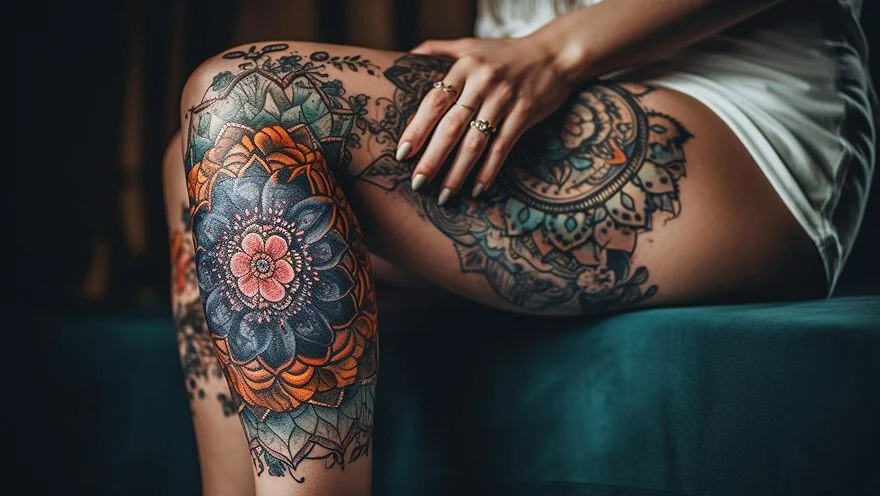 However, understanding is mutual. The effectiveness of Tattoo AI depends on the quality and breadth of its training data. Currently, in the training data of mainstream models, North American and European-style patterns account for approximately 65%, which may lead to deviations in their understanding accuracy of certain niche cultural symbols, with the correlation possibly being lower than 70%. For instance, when attempting to generate Maori patterns with specific cultural heritages, the algorithm may have a 20% probability of element misuse. To this end, leading development teams are dedicated to embedding the expert knowledge base of human tattoo artists, which contains over 100,000 process norms and taboos, into AI in the form of a rule engine, thereby enhancing its understanding accuracy of complex artistic intentions by another 15% and reducing the risk of cultural misinterpretation.
Looking to the future, the integration of affective computing and biosensing technology will be a breakthrough point. The experimental project has attempted to quantify users' subconscious preferences by analyzing their heart rate changes and micro-expressions when browsing different patterns, with a data sampling frequency of 60 times per second, and to transform implicit artistic resonances into explicit design parameters. Industry reports predict that by 2026, over 40% of custom tattoos will come from AI-assisted design, and its market growth rate is expected to be 25% annually. Ultimately, the value of Tattoo AI does not lie in replacing artists, but in serving as a digital artist whose understanding and efficiency are constantly evolving. It materializes human's vague inspirations with a 98% fit rate, ushering in a new era of human-machine collaborative skin art.
However, understanding is mutual. The effectiveness of Tattoo AI depends on the quality and breadth of its training data. Currently, in the training data of mainstream models, North American and European-style patterns account for approximately 65%, which may lead to deviations in their understanding accuracy of certain niche cultural symbols, with the correlation possibly being lower than 70%. For instance, when attempting to generate Maori patterns with specific cultural heritages, the algorithm may have a 20% probability of element misuse. To this end, leading development teams are dedicated to embedding the expert knowledge base of human tattoo artists, which contains over 100,000 process norms and taboos, into AI in the form of a rule engine, thereby enhancing its understanding accuracy of complex artistic intentions by another 15% and reducing the risk of cultural misinterpretation.
Looking to the future, the integration of affective computing and biosensing technology will be a breakthrough point. The experimental project has attempted to quantify users' subconscious preferences by analyzing their heart rate changes and micro-expressions when browsing different patterns, with a data sampling frequency of 60 times per second, and to transform implicit artistic resonances into explicit design parameters. Industry reports predict that by 2026, over 40% of custom tattoos will come from AI-assisted design, and its market growth rate is expected to be 25% annually. Ultimately, the value of Tattoo AI does not lie in replacing artists, but in serving as a digital artist whose understanding and efficiency are constantly evolving. It materializes human's vague inspirations with a 98% fit rate, ushering in a new era of human-machine collaborative skin art.
However, understanding is mutual. The effectiveness of Tattoo AI depends on the quality and breadth of its training data. Currently, in the training data of mainstream models, North American and European-style patterns account for approximately 65%, which may lead to deviations in their understanding accuracy of certain niche cultural symbols, with the correlation possibly being lower than 70%. For instance, when attempting to generate Maori patterns with specific cultural heritages, the algorithm may have a 20% probability of element misuse. To this end, leading development teams are dedicated to embedding the expert knowledge base of human tattoo artists, which contains over 100,000 process norms and taboos, into AI in the form of a rule engine, thereby enhancing its understanding accuracy of complex artistic intentions by another 15% and reducing the risk of cultural misinterpretation.
Looking to the future, the integration of affective computing and biosensing technology will be a breakthrough point. The experimental project has attempted to quantify users' subconscious preferences by analyzing their heart rate changes and micro-expressions when browsing different patterns, with a data sampling frequency of 60 times per second, and to transform implicit artistic resonances into explicit design parameters. Industry reports predict that by 2026, over 40% of custom tattoos will come from AI-assisted design, and its market growth rate is expected to be 25% annually. Ultimately, the value of Tattoo AI does not lie in replacing artists, but in serving as a digital artist whose understanding and efficiency are constantly evolving. It materializes human's vague inspirations with a 98% fit rate, ushering in a new era of human-machine collaborative skin art.Ready to pressure-test your numbers?
A 30-minute call with a senior partner. Candid, no slide deck.