
Since 2017Insights
What is alumina used for in modern abrasive manufacturing?
Aluminum oxide ($Al_2O_3$) functions as the primary abrasive grit in global industrial supply chains, accounting for approximately 65% of the total bonded abrasive market share as of 2025. Manufacturers utilize electric arc furnaces to process bauxite into specific crystalline grades, enabling targeted applications ranging from heavy roughing to precision finishing. White fused alumina, maintaining >99% purity, facilitates precision surface grinding on high-tensile alloys due to its friable crystalline structure. What is alumina used for involves exploiting its thermal refractoriness and hardness—measuring 9 on the Mohs scale—to optimize material removal rates across the aerospace and automotive sectors.
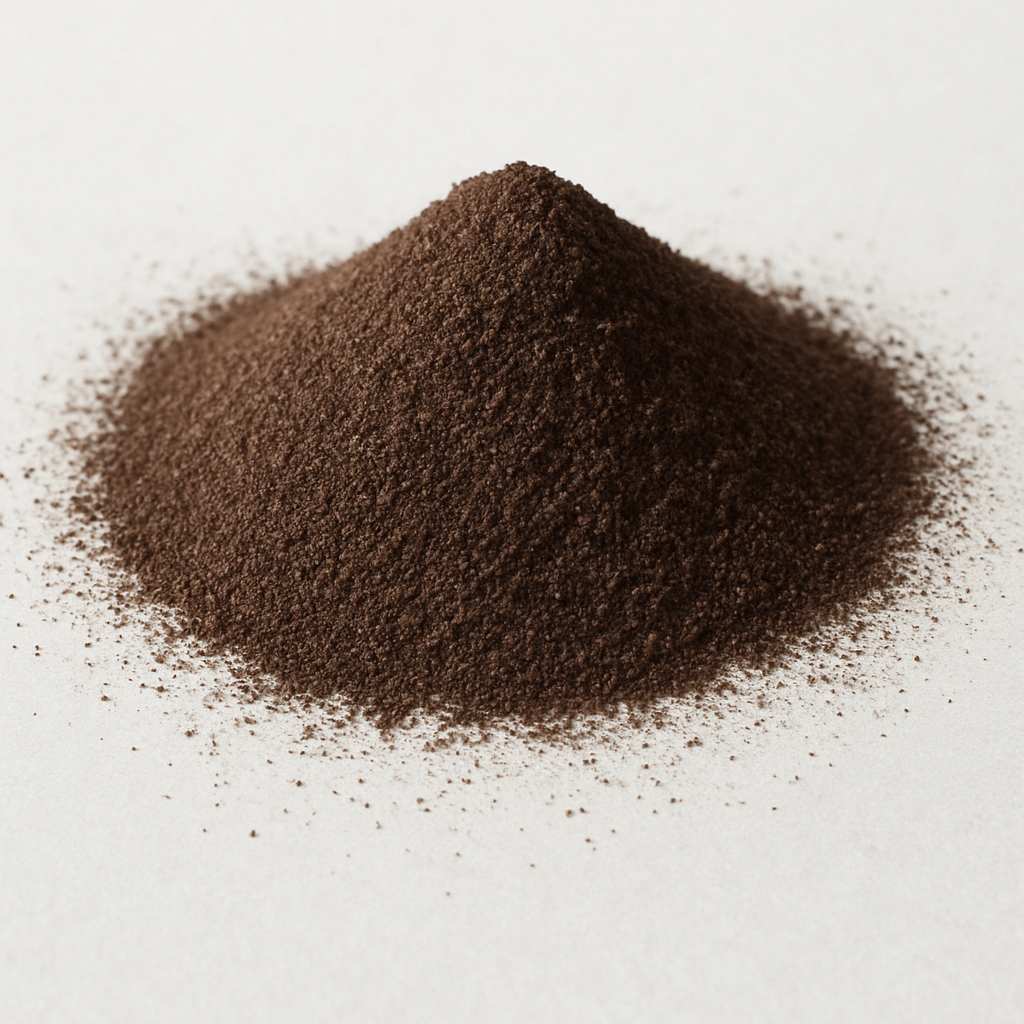
Aluminum oxide exists as a crystalline solid with a melting point of 2,072°C, which allows it to function within extreme thermal environments. It maintains structural integrity during grinding processes that generate localized temperatures exceeding 1,000°C.
Engineers select specific grades based on the required material removal rate and the physical properties of the target workpiece alloy. These selection criteria rely on the bauxite reduction method used during the initial fusion stage in the furnace.
Production occurs in furnaces where raw materials fuse at temperatures reaching 2,200°C, a process that determines grain purity. Brown fused alumina typically contains 94-97% $Al_2O_3$ and experts select this grade for heavy-duty stock removal on hardened steel components.
The higher toughness of brown fused alumina allows it to withstand high-pressure grinding cycles without premature fracturing. This durability ensures that the grain remains in contact with the workpiece for longer durations, reducing the frequency of wheel dressing cycles.
While brown alumina handles heavy removal, high-purity variants serve different operational requirements. White fused alumina possesses >99% purity and lower toughness, which allows for consistent micro-fracturing during standard operation.
This friability generates fresh cutting points continuously, preventing the glazing that often plagues lower-grade abrasives during precision cylindrical grinding tasks. The following table illustrates the relationship between grain grade and industrial application:
| Grade | Purity | Primary Application |
| Brown | 94-97% | Heavy Stock Removal |
| White | 99%+ | Precision Surface Finishing |
| SG | 99.5%+ | High-Stress Creep Feed |
This breakdown of purity levels leads to the technical inquiry regarding what is alumina used for in modern production lines. Sol-gel (SG) alumina represents a technological shift, using chemical precipitation to form a sub-micron grain structure rather than high-temperature fusion.
Research indicates that SG alumina retains its cutting profile 300% longer than traditional fused grains in creep-feed grinding scenarios. The manufacturing process for SG alumina begins with aluminum hydroxide, which is converted to a boehmite gel before sintering.
This sintering process occurs at lower temperatures than fusion, roughly 1,400°C, creating a microcrystalline structure. The longevity of these grains forces changes in the selection of bonding agents used to secure the abrasive to the grinding wheel.
The abrasive bond must match the grain breakdown rate to prevent surface damage. Vitrified bonds, which utilize ceramic matrices fired at temperatures around 1,200°C, are often paired with SG alumina to control how the wheel breaks down during high-pressure cycles.
The structural relationship between the bond and the grain connects directly to coated abrasive manufacturing techniques. Electrostatic coating processes apply alumina grains to backing materials such as polyester or vulcanized fiber with precise orientation.
This technology ensures that 85% of grain points face outward, maximizing the initial aggression of abrasive belts used in the automotive repair sector. The electrostatic force aligns the longest axis of the crystal perpendicular to the backing, which reduces drag during initial contact.
This orientation technology influences how operators manage heat on the workpiece surface. Friction-induced heat often threatens the temper of steel parts if the abrasive grain fails to fracture properly, as excessive heat can alter the metallurgical properties of the metal.
Alumina’s chemical inertness prevents it from alloying with iron-based metals, ensuring that the abrasive does not weld to the surface at 800°C contact temperatures. This chemical stability is verified by the lack of reaction between $Al_2O_3$ and common alloys like 4140 steel during standardized testing.
Beyond bonded and coated forms, calcined alumina serves as a polishing medium in slurry form for optical glass manufacturing. Fine powders, often ranging from 0.05 to 5 microns, provide the mechanical force needed to achieve sub-micron surface roughness.
In 2024, data from specialized optical laboratories showed that a 0.3-micron alumina slurry achieved a surface finish of less than 0.01 microns Ra on borosilicate glass. The abrasive particles roll between the tool and the workpiece, creating a uniform removal rate across the surface.
This rolling mechanism creates a consistent finish without the deep scratching associated with harder, angular abrasives. The uniformity of the particle size distribution, often 98% within a specified micron range, ensures predictability in final surface topography.
The ability of alumina to exist in both large, blocky macro-grits and microscopic polishing powders creates versatility for manufacturing facilities. Facilities often maintain inventory of multiple grain sizes, from 12 grit for rough snagging to 1200 grit for mirror-like polishing.
The transition between these grit sizes requires distinct bond compositions to manage the forces involved. Coarser grits require high-strength resin bonds to prevent grain pull-out, while fine grits often utilize vitrified bonds for dimensional stability.
The choice of grit size also impacts the total porosity of the grinding wheel. Higher porosity wheels, occupying 30% to 50% of the wheel volume, allow for better coolant flow and chip clearance during grinding.
Improved chip clearance reduces the loading of the grinding wheel, where metal debris builds up in the pores of the abrasive. When the wheel remains free of debris, it requires less power to drive the motor, often reducing energy consumption by 10% during heavy operations.
As manufacturing specifications tighten, the use of shaped ceramic alumina grains is increasing. These grains, shaped like needles or triangles, provide higher contact pressure and faster material removal than traditional blocky fused alumina.
These engineered shapes are produced through the same sol-gel process as SG alumina but are extruded to specific dimensions before calcination. This engineering level allows for precise control over the cutting geometry on every individual grain across the belt or wheel.
Ready to pressure-test your numbers?
A 30-minute call with a senior partner. Candid, no slide deck.